Why Do Volleyball Players Tape Their Fingers?

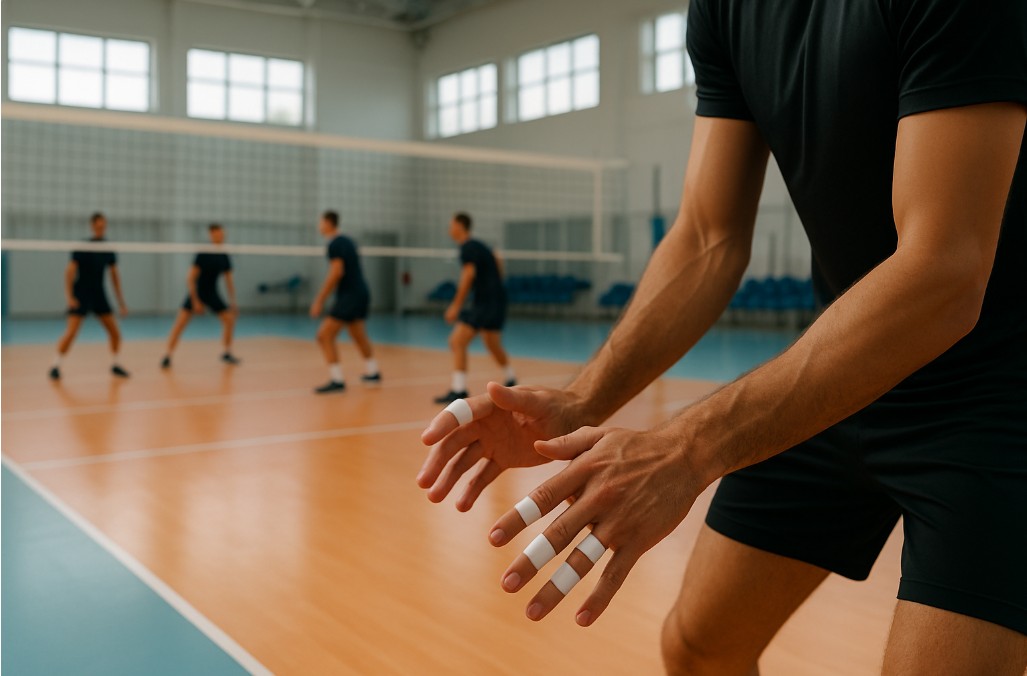
Have you ever watched a volleyball match and noticed players with tape wrapped around their fingers? It’s a common sight, but for those unfamiliar with the sport, it raises questions. Why do volleyball players tape their fingers, and what benefits does it provide?
The answer lies in a mix of injury prevention, performance support, and physical reinforcement. Taping is far from a fashion statement it’s a critical practice used by volleyball athletes to protect joints, stabilize finger movement, and enhance control during intense play.
Whether it’s blocking a spike, setting the ball, or diving for a dig, the hands are always at risk. Taping helps manage those risks and allows players to compete with confidence even when dealing with previous injuries.
What Are the Main Reasons Volleyball Players Tape Their Fingers?
Volleyball players tape their fingers primarily to prevent injuries, support weak joints, and boost performance. But each player might have their own reason depending on their position, past injuries, and playing conditions.
Here’s a breakdown of the most common purposes:
- Injury Prevention: Reduces the risk of sprains, jams, and fractures.
- Joint Stabilization: Prevents overextension and awkward finger movements.
- Support & Strength: Helps fingers feel more secure and responsive.
- Recovery Aid: Allows players with existing injuries to continue playing.
- Confidence Boost: Less fear of reinjury means more focus on gameplay.
- Protection from Elements: Shields skin from dryness and cracking in harsh environments.
How Does Finger Taping Help Prevent Injuries in Volleyball?
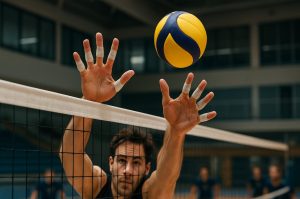
Injury prevention is one of the most crucial aspects of finger taping. The repetitive actions of setting, blocking, and passing place immense strain on the fingers, especially during high-level matches or intense practice sessions. Forceful impacts, awkward bends, and fast-paced ball movement can quickly lead to injury.
Taping reduces this risk by limiting unnecessary joint movement and stabilizing tendons and ligaments. This is particularly helpful for front-row players who frequently block.
The tape provides support that acts like an external brace, absorbing part of the shock and directing pressure away from the weakest points of the finger.
In some cases, athletes use specific taping methods to guard against hyperextension. For example, a middle blocker might tape their index and middle fingers together an approach known as buddy taping, to form a unified, stronger surface against spikes.
Why Is Joint Stabilization Important During Volleyball Play?
The joints in the fingers are small, delicate, and susceptible to strain. Whether it’s from repeated sets or sudden impact during a block, the small ligaments that hold the joints together can be pushed beyond their limit.
Taping offers a solution by helping to hold the joints in a more controlled and supported position. This stabilization prevents unnatural movement that can lead to sprains or ligament tears.
Players who have experienced dislocations or minor joint instability often rely on taping to continue playing without compromising their recovery.
This technique is especially common among liberos and defensive specialists, who regularly dive for low balls. Their hands absorb significant impact with the floor and the ball, making joint support essential to protect their fingers long term.
In What Ways Does Finger Taping Enhance Control and Strength?
While finger taping doesn’t physically increase muscle strength, it contributes to better control and perceived power.
The compression provided by the tape can enhance proprioception the body’s awareness of movement and position. With better feedback from their fingers, players can make more precise passes, sets, and hits.
For example, a setter who regularly handles the ball might tape the tips of their index and thumb for better grip and control during fast exchanges. The sensation of added support gives them confidence to place the ball accurately, especially in high-pressure situations.
Taping also reduces muscle fatigue. By keeping the finger joints stable, less energy is expended in controlling motion, allowing players to maintain performance across longer rallies or extended match play.
Can Finger Taping Help Athletes Recover from Minor or Chronic Injuries?

Many athletes continue to play even with lingering finger injuries. Taping allows for this by reducing strain on the affected area. When used correctly, tape can act as a supportive structure that aids recovery without completely immobilizing the finger.
For instance, an outside hitter dealing with recurring joint inflammation might tape the finger to limit excessive movement during swings.
The tape offers partial immobilization while still allowing functional play, making it possible to participate in matches without aggravating the injury further.
Chronic conditions like tendonitis or repetitive strain injuries can also be managed with strategic taping. Over time, this allows players to maintain match fitness without compromising long-term joint health.
How Does Taping Improve Player Confidence on the Court?
Physical safety isn’t the only reason athletes tape their fingers psychological comfort plays a significant role. Injuries can have a lasting mental impact, and even after physical healing, many players continue to feel hesitant during certain movements.
Taping can ease this hesitation. It provides a visible and tangible reminder that the finger is supported. This sense of security allows players to perform more assertively, particularly in high-intensity plays such as blocking or aggressive digs.
Even in cases where there is no injury, some players choose to tape their fingers as a precaution. It becomes part of their routine and preparation similar to how a runner might wear a knee brace as reassurance.
Can Finger Taping Protect Against Environmental Conditions?

While not its primary purpose, taping can offer protection against harsh conditions that may otherwise affect performance. In dry or cold environments, fingers can crack or become irritated, leading to discomfort and reduced sensitivity.
Taping provides a barrier that keeps moisture in and external elements out. This is particularly useful during outdoor tournaments where sand, wind, or cold air can create issues for sensitive skin on the fingertips.
Some players also use tape to reduce the slipperiness caused by sweat. In this case, thin tape wraps help absorb moisture and maintain consistent grip, which is critical for ball control.
What Are the Common Techniques Used for Taping Fingers in Volleyball?
Players adopt various taping methods depending on their position and injury history. The goal in all cases is to support the joints while maintaining enough flexibility for gameplay.
One of the most widely used methods is buddy taping, which involves securing two adjacent fingers together. This helps distribute pressure more evenly and prevent sideways bending.
Another method is joint-specific taping, which targets only the affected area such as the proximal interphalangeal jointwith overlapping layers to limit hyperextension.
Some players apply spiral wraps for general compression, especially if they feel joint soreness but do not have a specific injury. Others tape only their finger pads or tips for improved grip or skin protection during serves and digs.
What Tape Types Are Preferred by Volleyball Players?
The choice of tape varies depending on its purpose some tapes are better for injury support, while others focus on comfort or flexibility. The table below compares common types:
| Tape Type | Best For | Characteristics |
|---|---|---|
| Athletic Cloth Tape | Stabilizing joints | Rigid, durable, requires scissors |
| Kinesiology Tape | Tendon support and flexibility | Stretchable, breathable, allows movement |
| Finger Wrap Tape | Quick protection and minor support | Self-adhesive, easy to remove and adjust |
| Zinc Oxide Tape | Reinforcing injuries | Non-stretch, firm hold, medical-grade |
Each player may have personal preferences. Some mix tapes for example, using cloth tape for joint support and finger wrap for tip protection.
Is Taping Required for All Volleyball Players?

Taping is not mandatory, and not all players use it. Decisions often depend on individual needs, position-specific risks, and coaching recommendations.
Positions like setters and liberos tend to use taping more frequently due to the repetitive use of fingers in setting and digging. Middle blockers and hitters may use it more for injury prevention due to the force of spikes and blocks.
While experienced players might use tape proactively, beginners typically rely on proper technique and strength training to avoid injury. That said, once a player experiences a finger injury, taping often becomes part of their routine.
Frequently Asked Questions
Is finger taping safe for regular use in volleyball?
Yes, if applied correctly. Overuse or improper taping may cause skin irritation, but when done properly, it’s safe and effective.
Can I still move my fingers after taping them?
You should be able to move them within a safe range. Taping aims to reduce extreme or dangerous movements, not eliminate motion entirely.
How do I know which taping technique to use?
It depends on your position, type of injury (if any), and the support you need. Athletic trainers can help identify the best method.
Can I reuse finger tape?
No, tape should be replaced each time. Used tape loses adhesion and may harbor bacteria or skin oils that affect performance.
Do professional players always tape their fingers?
Many do, especially if they play in high-impact positions or have a history of finger injuries. It becomes part of their preparation.
Is finger taping useful even if I’ve never had an injury?
Yes, it can be used preventively. Some players tape to reduce fatigue, maintain grip, or feel more confident during tough plays.
Should I tape all fingers or just specific ones?
Only tape fingers that need support. Over-taping can reduce mobility unnecessarily and interfere with ball handling.