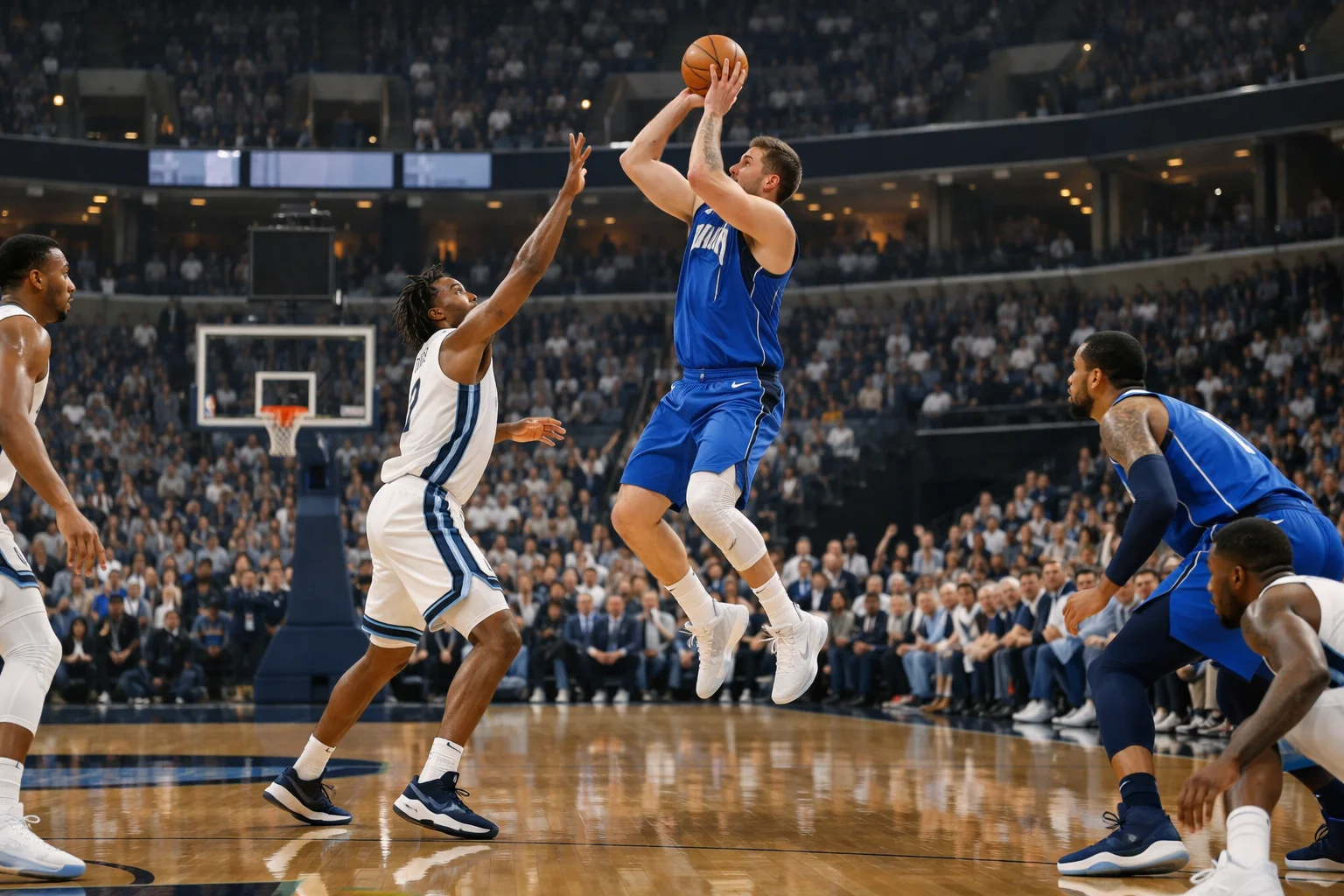
Dallas Mavericks vs Memphis Grizzlies Match Player Stats

How Did the April 19, 2025 Mavericks vs Grizzlies Match Unfold at FedExForum?
What truly happens when a team driven by star power faces a team built on depth, discipline, and momentum? That is exactly the question fans were asking as they settled into their seats at FedExForum for the April 19, 2025 showdown between the Dallas Mavericks and the Memphis Grizzlies.
With the arena packed to its 17,794 capacity and a lively atmosphere filling the building, spectators knew they were in for a competitive Western Conference clash. Both teams came into this matchup with contrasting narratives: Dallas searching for consistency on the road, and Memphis riding a strong season backed by teamwork and efficiency.
From the opening tip, it became clear that Memphis had come prepared to dictate the pace. They opened the first quarter aggressively, delivering a 39-point performance that set the tone early.
Dallas responded with determined play and flashes of brilliance from their star Anthony Davis, yet the Grizzlies’ balance and energy continued to separate them as the game progressed.
By the final buzzer, Memphis secured a 120-106 victory, reinforcing their season-long dominance over Dallas and adding yet another strong statistical performance to their 2025 campaign.
What Do the Quarter-by-Quarter Results Reveal About the Flow of the Game?
The progression of the game can be understood best by examining the quarter-by-quarter breakdown. Memphis immediately seized momentum with a powerful first period and never allowed Dallas to fully recover. Although the Mavericks improved in subsequent quarters, the early deficit proved too steep to overcome.
Quarter-by-Quarter Scores
| Quarter | Dallas Mavericks | Memphis Grizzlies |
|---|---|---|
| 1st | 24 | 39 |
| 2nd | 25 | 27 |
| 3rd | 29 | 30 |
| 4th | 28 | 24 |
| Final Score | 106 | 120 |
The first quarter’s 15‑point gap forced Dallas into catch‑up mode for the remainder of the game. Although the Mavericks gradually built offensive rhythm, particularly through Anthony Davis, the Grizzlies maintained control through efficient shooting and superior rebounding. Memphis led at every major checkpoint, reflecting their ability to manage both pace and possession effectively.
Which Players Stood Out as the Primary Contributors for Each Team?
Individual performances shaped the narrative of this matchup, and Dallas found its central star in Anthony Davis, who delivered one of his strongest scoring performances of the season.
His 40 points on 16-of-29 shooting, combined with confident free-throw execution, served as the backbone of Dallas’ offense. Davis imposed himself in the paint, scored off pick‑and‑roll actions, and carried the Mavericks’ scoring load for significant stretches.
For Memphis, Jaren Jackson Jr. emerged as the leading scorer with 24 points on 10-of-18 shooting. His ability to convert efficiently from various spots on the floor highlighted his offensive growth and versatility.
While Jackson delivered the highest point total for Memphis, the team’s strength came from across-the-board contributions. Rather than relying on a single dominant scorer, the Grizzlies leveraged balance, spacing, and shared responsibility to stay ahead throughout the game.
The contrast between Dallas’ reliance on Davis and Memphis’ collective approach underscored a key storyline: the Grizzlies executed as a complete unit, while the Mavericks struggled to produce complementary scoring behind their star.
How Did Team Shooting Percentages and Efficiency Impact the Final Result?
Both teams shot 47 percent from the field, but the similarities ended there. Memphis’ superior spacing and shot selection allowed them to convert a higher percentage of their three-point attempts, hitting 42 percent from beyond the arc compared to Dallas’ 32 percent. This discrepancy created a separation that Dallas could not overcome, particularly in critical possessions.
Turnovers further illustrated the difference in team execution. Dallas committed 16 turnovers, several of which resulted from forced passes or miscommunication in transition. Memphis, meanwhile, limited themselves to 12 turnovers, converting Dallas’ mistakes into fast-break opportunities and second-chance scoring moments.
Rebounding played an equally decisive role. Memphis collected 50 total rebounds, outpacing Dallas’ 36 and generating additional possessions that fueled their offensive rhythm. Many of Memphis’ scoring runs originated from offensive rebounds, giving them second looks and deflating Dallas’ defensive efforts.
Team Efficiency Comparison
| Metric | Mavericks | Grizzlies |
|---|---|---|
| Field Goal % | 47% | 47% |
| Three-Point % | 32% | 42% |
| Turnovers | 16 | 12 |
| Rebounds | 36 | 50 |
The table highlights the fundamental differences that shaped the game. Even when field goal percentages matched, Memphis remained more strategic and composed, ensuring that key possessions resulted in higher-value scoring opportunities.
Why Did Memphis Control Critical Moments More Effectively Than Dallas?
While the Mavericks showcased strong individual effort, particularly from Anthony Davis, Memphis excelled in areas that determine long-term consistency throughout a game.
Their control of pace was not dependent on tempo alone; it was driven by structured offensive sets, purposeful ball movement, and deliberate defensive rotations. Every possession seemed designed to generate either a high-percentage shot or pressure the Mavericks into defensive mistakes.
Defensively, Memphis anticipated Dallas’ reliance on Davis and adjusted by collapsing into the paint when necessary, while closing out efficiently on perimeter shooters.
Their switches were timely, their communication clear, and their effort sustained across all four quarters. Memphis made Dallas’ role players uncomfortable, limiting open shots and forcing late, contested attempts as the shot clock wound down.
On offense, the Grizzlies remained patient and unselfish. They identified mismatches, exploited transition opportunities, and repeatedly attacked gaps in Dallas’ defensive structure. Their balance made them unpredictable, and their consistency in making the extra pass contributed significantly to their scoring efficiency.
How Have the Grizzlies Performed Against the Mavericks Across the 2025 Season?
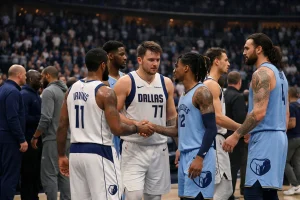
The April 19 matchup continued a trend that had defined the 2025 season: Memphis consistently outperformed Dallas. Not only did they win this game convincingly, but they also completed a 5 – 0 sweep against the Mavericks across all 2025 matchups.
Full 2025 Season Match History
| Date | Location | Result | Score | FG% | 3P% | Rebounds | Assists |
|---|---|---|---|---|---|---|---|
| Mar 7, 2025 | @ DAL | Win | 122–111 | 47.2% | 38.1% | 59 | 28 |
| Apr 13, 2025 | vs DAL | Win | 132–97 | 50.0% | 37.5% | 53 | 31 |
| Apr 18, 2025 | vs DAL | Win | 120–106 | 47.0% | 41.9% | 50 | 30 |
| Nov 7, 2025 | vs DAL | Win | 118–104 | 48.2% | 37.1% | 42 | 27 |
| Nov 22, 2025 | @ DAL | Win | 102–96 | 40.2% | 25.8% | 61 | 26 |
This stretch represents complete dominance. Across all five contests, Memphis controlled pace, rebounding, and efficiency, leading to substantial margins of victory in several games.
What Do the Grizzlies’ Five-Game Averages Show About Their Strengths?
To understand the consistency behind Memphis’ success, it helps to look at their aggregate statistics across these five wins.
Grizzlies’ 2025 Averages vs Dallas
| Category | Average |
|---|---|
| Points | 118.8 |
| Rebounds | 53.0 |
| Assists | 28.4 |
| Steals | 8.6 |
| Blocks | 5.8 |
| Field Goal % | 46.6% |
| Three-Point % | 36.1% |
| Free-Throw % | 84.7% |
| Turnovers | 12.6 |
These averages reveal a team that consistently executes well in all major statistical categories. Their high scoring average demonstrates their offensive confidence, while their rebounding dominance indicates superior physicality and positioning.
The assist numbers show a willingness to share the ball, creating high‑quality opportunities for multiple contributors. Meanwhile, limiting turnovers allowed Memphis to maintain control and structure in their offensive sets.
How Did Anthony Davis Influence Dallas’ Performance Throughout the Game?

Anthony Davis took on a substantial offensive burden, and his production reflected a determination to keep Dallas competitive. His decision-making, shot selection, and interior presence anchored Dallas’ efforts. In isolation situations, Davis scored efficiently, and on pick-and-roll plays, he remained a reliable finisher.
However, the Mavericks were unable to generate enough supplemental offense around him. The lack of consistent scoring from supporting players placed excessive pressure on Davis, while Memphis strategically forced the ball out of his hands in late-game scenarios.
Without balanced contributions, Dallas struggled to sustain momentum, particularly in moments where they appeared poised to cut into Memphis’ lead.
What Key Trends Defined the Mavericks vs Grizzlies Matchups This Season?
Several trends emerged from the repeated meetings between the two teams:
- Memphis consistently won the rebounding battle, often by double-digit margins.
- Their perimeter shooting remained more reliable than Dallas’, allowing them to stretch defenses effectively.
- Memphis’ scoring depth created problems for Dallas’ defensive schemes.
- The Mavericks relied heavily on top-heavy scoring, while Memphis embraced a team-first approach.
These patterns indicate that Memphis not only executed better but also matched up more effectively from a personnel standpoint, allowing them to dominate the season series.
What Implications Does This Game Hold for Both Teams Moving Forward?
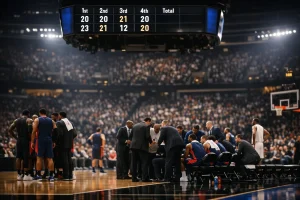
For Dallas, this game highlights areas requiring attention. Turnovers, defensive lapses, and inconsistency in secondary scoring must be corrected for the team to remain competitive in a tightly contested Western Conference. Strengthening ball movement and generating open looks for more players will be crucial.
Memphis, on the other hand, continues to build momentum. Their system thrives on discipline, versatility, and collective effort. With strong performances in both the regular season and these matchups, the Grizzlies establish themselves as a well-rounded and resilient team capable of sustained success.
FAQs
Why did Memphis win despite both teams shooting 47 percent from the field?
Memphis converted more three-pointers, protected the ball better, and dominated the rebounding battle, resulting in more quality possessions.
Did Anthony Davis’ 40-point performance influence the game significantly?
While Davis was outstanding, Dallas lacked secondary scoring consistency, making it difficult to keep pace with Memphis’ balanced offense.
How important were turnovers in deciding the game?
Dallas’ 16 turnovers disrupted their offensive flow, while Memphis’ ability to limit mistakes helped maintain control of the tempo.
How did Memphis use their depth to create advantages?
Multiple players contributed meaningfully, allowing Memphis to generate steady scoring without relying on a single star.
What defensive strategies worked best for Memphis?
They employed effective help-side rotations, pressured ball handlers, and limited Dallas’ perimeter looks with disciplined switching.
Has Dallas managed to beat Memphis at all during the 2025 season?
No. Memphis went 5–0 against Dallas in 2025, demonstrating consistent dominance.
What must Dallas improve for future matchups?
Reducing turnovers, enhancing bench scoring, and reinforcing defensive rebounding should be top priorities moving forward.