Highest Paid Non QB in NFL: Who’s Leading the Pack in 2025?

Who Is the Highest Paid Non-Quarterback in the NFL Today?
When we talk about the most lucrative NFL contracts, quarterbacks usually headline the discussion. It makes sense they touch the ball on every play and are often considered the centerpiece of a team’s success.
But what about the players who aren’t throwing passes? What about the defensive beasts chasing quarterbacks down or the wide receivers who rack up highlight-reel plays?
In 2025, non-quarterbacks are redefining what it means to be valuable in the NFL. As of this season, the title of highest paid non QB in NFL belongs to T.J. Watt, the relentless edge rusher for the Pittsburgh Steelers.
Watt secured a record-setting contract extension in July 2025 that pays him an average of $41 million per year, officially making him the most highly compensated non-QB in the league’s history.
This groundbreaking deal marks a significant shift in NFL salary dynamics. Until recently, defensive players and skill-position athletes on offense played second fiddle in terms of earnings.
But with the salary cap surging and on-field impact metrics evolving, the NFL is entering an era where non-QBs are finally being paid like franchise cornerstones.
Why Are Non-QBs Earning Record-Breaking Contracts?
There are several key reasons behind the financial elevation of non-quarterbacks in the NFL. First, the 2025 salary cap increase to $255.4 million has given teams the freedom to distribute more money across multiple positions.
With quarterback salaries reaching astronomical levels, some teams are opting to spread their financial commitments more evenly, locking in top talent at other critical spots.
Another major factor is the increasing emphasis on positional value. Players who can consistently disrupt plays like pass rushers and shutdown corners are now seen as essential to winning, especially in a league where offenses are more explosive than ever.
At the same time, wide receivers are putting up quarterback-level statistics, drawing double coverages, and creating mismatches that shift the flow of games.
In essence, teams are no longer investing solely in quarterbacks. They’re also building around elite playmakers who can alter the outcome of a game in one snap, regardless of which side of the ball they play on.
Who Are the Top Five Highest Paid Non-QBs in the NFL in 2025?
The landscape of NFL contracts has shifted dramatically, especially at the top. Here’s a breakdown of the top five highest paid non-quarterbacks in 2025 based on average annual salary:
| Rank | Player Name | Position | Team | Average Annual Salary |
| 1 | T.J. Watt | Defensive End | Pittsburgh Steelers | $41 million |
| 2 | Ja’Marr Chase | Wide Receiver | Cincinnati Bengals | $40.25 million |
| 3 | Myles Garrett | Defensive End | Cleveland Browns | $40 million |
| 4 | Danielle Hunter | Defensive End | Houston Texans | $35.6 million |
| 5 | Maxx Crosby | Defensive End | Las Vegas Raiders | $35.5 million |
What stands out here is the dominance of defensive ends in the top earners list. These are not just high-sack players they are foundational pieces for their defenses, often demanding double-teams, creating turnovers, and applying relentless pressure that disrupts even the best quarterbacks.
On the offensive side, Ja’Marr Chase has emerged as the new financial benchmark for wide receivers. His combination of route-running, speed, and elite production earned him a record-setting deal that reflects his game-changing ability.
How Did T.J. Watt Become the Highest Paid Non-QB in NFL History?
T.J. Watt’s contract is not just the result of elite performance it’s also a symbol of changing priorities across the league.
After years of Pro Bowl selections, a Defensive Player of the Year award, and consistent dominance off the edge, the Pittsburgh Steelers rewarded Watt with a four-year extension averaging $41 million annually.
Watt’s deal includes substantial guarantees and performance incentives, but what truly set it apart was its timing. Coming just ahead of Myles Garrett’s new deal and Ja’Marr Chase’s extension, Watt’s contract reset the market and ensured he would be the highest-paid defender in the league.
This move wasn’t just about stats. Watt brings leadership, durability, and elite athleticism to a team that’s long prided itself on defensive excellence. The Steelers saw a player worth building around, even at quarterback-level money.
Why Are Defensive Ends Dominating the Salary Charts?
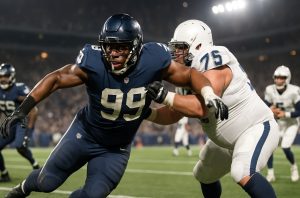
Three of the top five highest-paid non-QBs Watt, Garrett, and Crosby play defensive end, with Danielle Hunter not far behind. This is no coincidence. In today’s NFL, edge rushers are as important as ever.
Their primary job get to the quarterback has never been more vital in a league where offenses are operating at historic efficiency.
These players aren’t just racking up sacks; they’re forcing hurried throws, disrupting timing routes, and collapsing pockets in critical moments.
A great defensive end can derail an entire offensive game plan. That kind of impact translates into massive value, and, increasingly, into massive paychecks.
Additionally, these defenders often lead their respective locker rooms, bringing intangibles that go far beyond the stat sheet. In many cases, they’re as central to a team’s identity as the quarterback.
How Are Wide Receivers Like Ja’Marr Chase Reshaping Offensive Salaries?
While defensive ends are taking the financial spotlight on defense, wide receivers are doing the same on offense. Ja’Marr Chase’s recent extension with the Cincinnati Bengals averaging $40.25 million per year is the highest ever for a receiver and one of the top contracts in NFL history.
Chase has been a game-changer since entering the league, combining explosive athleticism with elite ball skills and route precision.
His chemistry with quarterback Joe Burrow and his ability to dominate single coverage have made him nearly impossible to contain.
This rise in receiver salaries reflects a broader trend. As teams pass more frequently and look to stretch the field vertically, top-tier wideouts are becoming the centerpiece of offensive schemes.
Just as quarterbacks command top dollar for directing the offense, wide receivers are earning premium pay for making it explosive.
How Do Salaries Vary Across NFL Positions in 2025?
To understand the scale of the shift in earnings, here’s a table comparing the average salaries by position in 2025:
| Position | Average Salary |
|---|---|
| Quarterback | $43 million |
| Defensive End | $26 million |
| Wide Receiver | $24.5 million |
| Offensive Tackle | $21.2 million |
| Linebacker | $19 million |
| Cornerback | $17.4 million |
| Tight End | $11 million |
| Running Back | $10.8 million |
| Safety | $9.2 million |
| Kicker | $5 million |
While quarterbacks still sit comfortably at the top, edge rushers and wide receivers are rapidly closing the gap. Notably, offensive tackles responsible for protecting the quarterback’s blind side also command premium salaries.
This table reveals a strategic approach to spending. Teams are investing in players who impact the passing game whether that’s protecting the passer, catching the pass, or disrupting the throw.
What Does the Future Hold for Non-QB Salaries?
The upward trend is expected to continue. With the NFL generating record revenue from media rights, international expansion, and digital streaming platforms, the salary cap is likely to grow in the coming years. That means more room for blockbuster contracts across multiple positions.
Upcoming free agents like Patrick Surtain II, Brian Burns, and CeeDee Lamb are expected to set new benchmarks in their respective positions.
We may soon see contracts exceeding $45 million per year for non-QBs especially for defensive stars who can dictate the tempo of a game or offensive players who consistently draw double coverage.
Moreover, negotiations around the 2026 Collective Bargaining Agreement could further shift the financial balance, possibly giving players a larger share of league revenues and strengthening the trend of high-paying deals across the board.
How Should NFL Teams Adapt to This Financial Shift?
With non-QB salaries skyrocketing, NFL front offices face the delicate challenge of managing the salary cap while retaining elite talent. Successful teams will be those that balance heavy investments in key positions with strong drafting and cap flexibility.
It also means developing talent in-house becomes more important. Rookies on affordable contracts can offer high performance without high cost, allowing teams to spend big on established veterans in premium positions.
Teams that fail to adapt may struggle to build complete rosters, especially if too much is tied up in one or two positions. But those who understand the evolving value of non-QBs and act early will be best positioned for sustained success.
FAQs – NFL Salaries, Player Contracts & Top Earners
Who is currently the highest paid non-QB in the NFL?
T.J. Watt, with an average annual salary of $41 million, holds the top spot as of the 2025 season.
How much does Ja’Marr Chase earn under his new contract?
Chase earns $40.25 million per year, making him the highest-paid wide receiver in league history.
Why are edge rushers getting such large contracts?
They disrupt offenses, pressure quarterbacks, and are often the defensive centerpiece making them indispensable.
Is the salary cap increase affecting non-QB contracts?
Yes, the 2025 salary cap increase has enabled teams to offer record-breaking deals to top talent at multiple positions.
Are offensive linemen also seeing a rise in pay?
Definitely. Players like Tristan Wirfs and Penei Sewell are earning over $25 million per year as the market for tackles heats up.
Will future CBAs impact player salaries?
Most likely. The 2026 CBA could provide players with a larger revenue share, potentially pushing salaries even higher.
What positions are expected to see big contract jumps next?
Cornerbacks, linebackers, and safeties are all likely to see salary growth, especially as defenses adapt to evolving offensive schemes.